
Navigating the Transition Cleanly
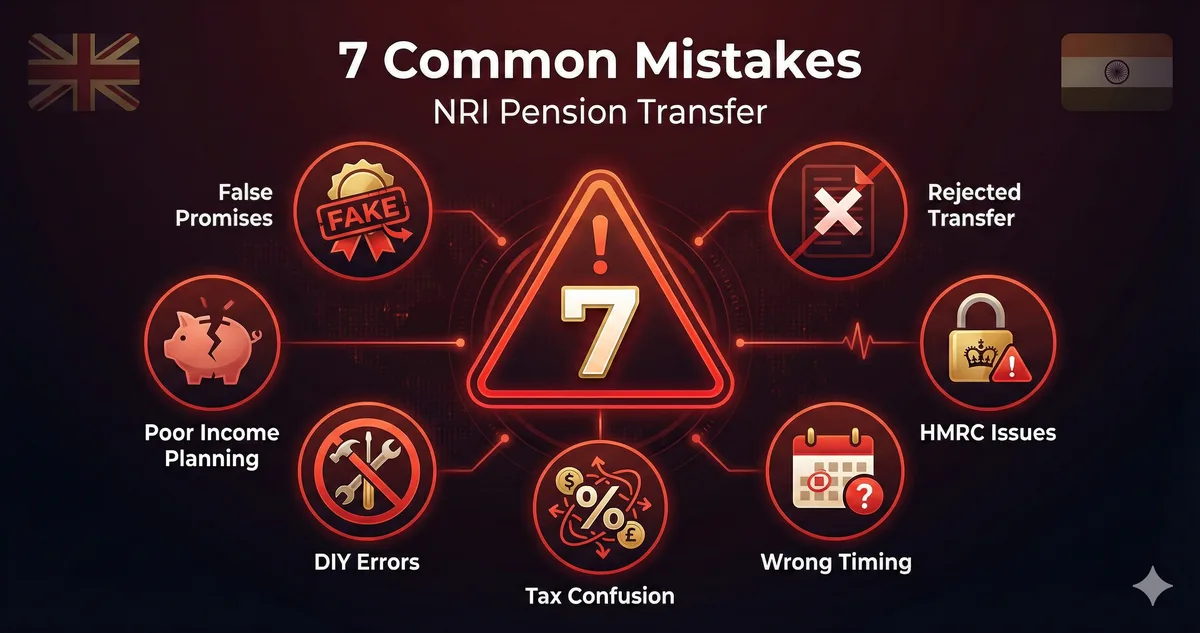
Relocating back to India after years of working in the UK is an exciting life transition. However, managing your cross-border wealth involves navigating a complex web of tax and regulatory rules. Even highly sophisticated professionals frequently make expensive mistakes simply due to a lack of awareness of how UK and Indian rules interact.
Let us review the most common financial errors returning NRIs make, and how you can proactively avoid them.
The 4 Most Common Financial Mistakes
1. Failing to Update Tax Residency Status Promptly
When you relocate, your residency status under Indian tax laws shifts from Non-Resident Indian (NRI) to **Resident and Ordinarily Resident (ROR)** over a transitional period. You must formally update your KYC records, NRE/NRO bank accounts, and investment portfolios with your financial institutions. Leaving accounts marked as "Non-Resident" when you are physically settled in India represents a major regulatory violation.
2. Ignoring Schedule FA (Foreign Assets) Disclosure
Under India's Black Money Act, any tax-resident in India who holds foreign assets (such as UK bank accounts, shares, insurance policies, or properties) must declare them in detail in **Schedule FA** of their annual Indian Income Tax Return. The penalties for non-disclosure or simple clerical errors are severe—amounting to flat fines of **10 Lakh Rupees**, even if the underlying assets are fully legitimate.
The Schedule FA Protection
Successful QROPS transfers move your UK pension assets directly into a regulated Indian scheme, simplifying your foreign asset declarations and reducing your Schedule FA exposure.
3. Leaving Pension Capital Exposed to UK Inheritance Tax
Many NRIs leave their UK pension accounts untouched, assuming they are safe forever. However, with the UK's upcoming **April 2027 Inheritance Tax changes**, unused UK pensions will be subject to up to 40% estate duty on death. Failing to act early to transfer these assets via QROPS represents a massive wealth-transfer risk for your family.
4. Fragmented Capital Management
Holding multiple bank accounts, scattered share portfolios, and legacy pension pots across different countries makes tracking your wealth highly difficult. Consolidating your assets into structured, local Indian vehicles ensures you have full visibility and control over your retirement capital.
Avoid Financial Errors
Request a Comprehensive Wealth Audit
Our cross-border tax experts will conduct a detailed review of your bank accounts, pensions, and foreign assets to ensure total compliance with Indian and UK laws.
Secure Expert Guidance
Cross-border tax rules are highly complex, but they are highly manageable when addressed early. By updating your tax status, declaring foreign assets diligently, and consolidating your pensions cleanly, you can protect your wealth and enjoy a peaceful, worry-free retirement in India.