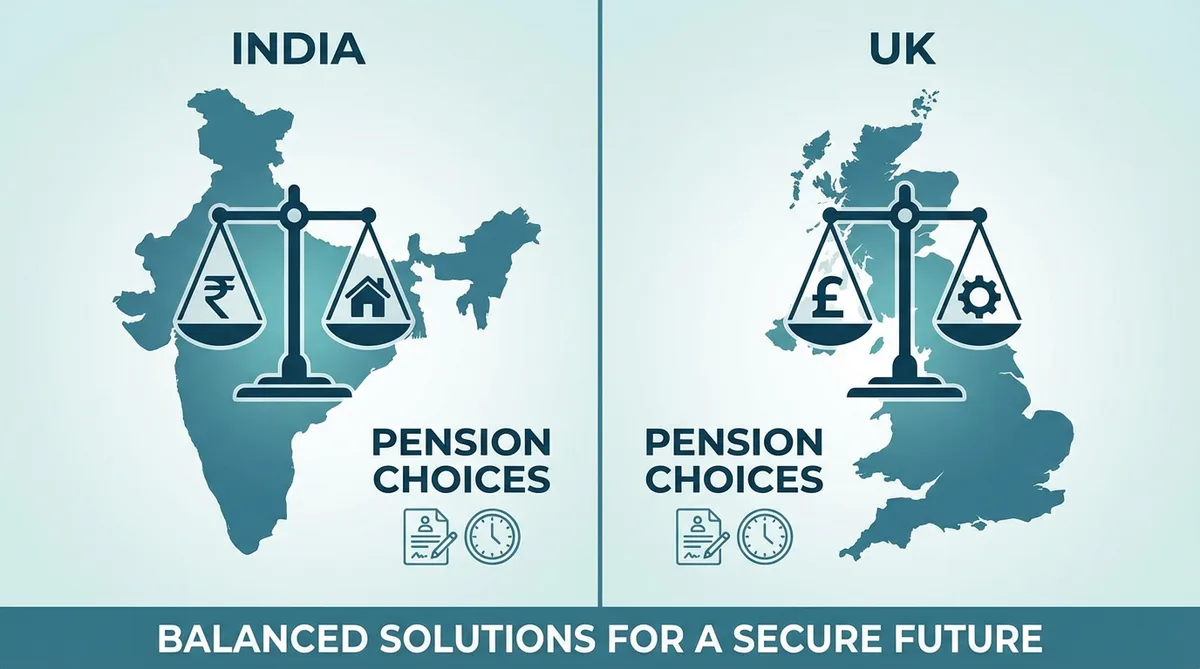
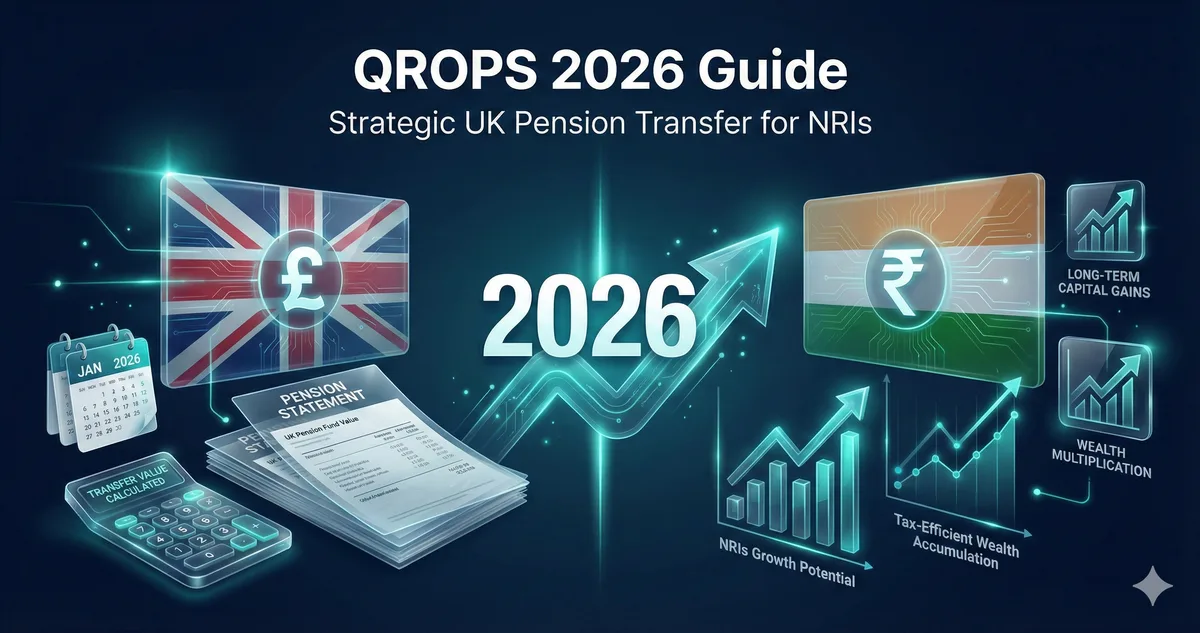
What is QROPS in 2026?
QROPS stands for Qualifying Recognised Overseas Pension Scheme. It is an overseas pension scheme that HMRC has formally recognised as eligible to receive transfers from UK registered pensions. For NRIs returning to India — or already settled there — QROPS is the route that allows your UK pension to move into an HMRC-recognised Indian scheme without triggering an unauthorised payment charge.
In 2026, QROPS remains the only structured, HMRC-compliant way to bring a UK private pension into India while preserving its tax-protected status on the UK side. The framework hasn't changed in spirit, but a few rules have tightened — particularly around the Overseas Transfer Charge and the upcoming UK inheritance-tax treatment of pensions from 2027.
Who should consider a QROPS transfer in 2026?
You should genuinely think about transferring your UK pension to India via QROPS if you fit any of these profiles:
- NRIs returning to India permanently in the next five years.
- Already-relocated NRIs whose UK pension is still sitting in pounds while their spending is in rupees.
- Multi-pension holders with two or more legacy UK pots from past employers.
- NRIs near retirement who have not yet purchased a UK annuity.
- Family planners concerned about the 2027 UK inheritance tax exposure on un-transferred pensions.
If your UK pension is the State Pension or an unfunded public-sector scheme (NHS, teachers, civil service, armed forces, police), it cannot be transferred. Most private pensions can.
The 2026 HMRC eligibility rules
Three things must be true for a UK-to-India QROPS transfer to be HMRC-compliant in 2026:
- The receiving Indian scheme must appear on HMRC's Recognised Overseas Pension Schemes (ROPS) list. The list updates regularly — we verify it live before every transfer.
- The transfer must follow HMRC's information requirements, including completion of Form APSS 263 (member's declaration) and proper notification by the ceding UK provider.
- The transfer must avoid the unauthorised payment charge — up to 55% of the transferred amount — which is triggered only when funds move to a non-recognised scheme or in breach of the rules.
The 25% Overseas Transfer Charge: when it applies in 2026
Key 2026 update
HMRC charges 25% on QROPS transfers unless the receiving scheme is in your country of residence. For an NRI tax-resident in India transferring to an Indian QROPS, the charge typically does not apply. Residency timing matters — transfers made before relocation can be caught.
The Overseas Transfer Charge (OTC) is the single biggest cost trap on a QROPS transfer. The exemption for "country of residence" sounds simple but the timing rules are strict: HMRC looks at your tax-residency position at the moment of transfer and for the five years that follow. If your residency changes in that window, the charge can be retrospectively triggered.
This is why the order of operations matters. Most NRIs we work with either complete the QROPS transfer after they're established as Indian tax residents, or document residency intent in a way that aligns with HMRC's tests. Our QROPS calculator models both scenarios.
Which Indian schemes qualify in 2026?
Only schemes on HMRC's ROPS list can accept a UK transfer. The list is shorter for India than for the EU or Gulf, but it does include several long-running options — primarily under the National Pension System (NPS) Tier-I and certain insurer-administered structures — that have remained recognised. Suitability depends on:
- Your age and retirement timeline
- Whether you want lump-sum access at vesting
- Whether you need a regular income or a flexible drawdown
- Your overall asset allocation and risk profile
We won't list specific schemes here because the ROPS register changes monthly — we always verify against the live list before recommending. Request a free assessment and we'll match you to current options.
How long does a UK-to-India QROPS transfer take in 2026?
- Fast track (4–6 weeks): single defined-contribution scheme, prompt UK provider, straightforward residency.
- Typical (6–12 weeks): 1–2 schemes, normal HMRC paperwork, standard Indian onboarding.
- Complex (12–20 weeks): defined-benefit schemes, multiple providers, or cross-border tax modelling required.
The UK ceding provider's response time is almost always the bottleneck — not HMRC, not the Indian scheme. The pension industry's "ten working days for a CETV quote" guideline is rarely met in practice.
The 5-step transfer process we use
- Eligibility check. Free, no-obligation. We classify your scheme and check it against the live ROPS list.
- HMRC compliance review. OTC analysis, charge-band screening, cross-border tax memo.
- Transfer blueprint. Recommended Indian scheme, document checklist, fee, timeline, risks — in writing.
- End-to-end execution. UK ceding pack and Indian onboarding pack run in parallel. Weekly status updates.
- Settlement. Funds move directly between providers. No holding accounts in our name. Onboarding session at the end.
The full version is on our process page.
GBP–INR currency planning
The pound has been volatile against the rupee for the past five years. Two practical takeaways:
- Don't wait for "the perfect exchange rate" — nobody calls them right consistently. The cost of leaving the pension exposed to GBP inflation typically outweighs any benefit from timing.
- Once funds settle in INR, your retirement income matches the currency you'll spend — eliminating the ongoing volatility entirely.
Costs in 2026
A QROPS transfer involves three potential cost layers: the OTC (where applicable, modelled in advance), the receiving scheme's onboarding and ongoing fees, and an adviser fee for facilitation. We work fee-only with no commission bias — pricing is agreed in writing before any work begins.
Get your 2026 transfer plan
Free, no-obligation QROPS assessment
Tell us about your UK pension. We'll come back within one working day with a tailored 2026 plan covering eligibility, OTC position, scheme choice and timeline.
Common 2026 mistakes to avoid
- Transferring before establishing tax residency in India (OTC trap).
- Picking a scheme that has slipped off the ROPS list since you last checked.
- Forgetting that purchasing a UK annuity locks the funds and forecloses transfer.
- Underestimating the 2027 UK inheritance-tax exposure on un-transferred pensions.
Final word
QROPS in 2026 is straightforward when handled by specialists and risky when handled casually. The structure works, HMRC supports it, and the Indian framework has stabilised. The single biggest lever is timing — both for the OTC and for your wider retirement plan.
If a UK pension transfer to India is on your radar this year, get a free assessment — even just to know where you stand.